
Tax News October 2026
Welcome to Tax News
Subscribe to get monthly updates on tax laws, policies, and events.
Overview
Tax News is a monthly online publication to inform tax professionals, taxpayers, and business owners about state income tax laws; Franchise Tax Board regulations, policies, and procedures; and events that may impact or provide valuable information for the tax professional community.
We also periodically release Tax News Flashes to quickly notify subscribers of urgent time-sensitive information.
In this edition
- CTEC Reports on Taxpayer Protection, Technology and FTB Tax Preparer Enforcement
- 2026 Indexing
- Senate Bill 1435 - Specified Date Code Maintenance/Conformity 2025
- Extended Due Date for C Corporations
- Attend a Virtual Withholding Presentation
- New Legislative Services Bureau Director
- Internal Revenue Service (IRS) Updates
- Ask the Advocate: Using FTB Call Centers Efficiently
CTEC Reports on Taxpayer Protection, Technology and FTB Tax Preparer Enforcement
The California Tax Education Council (CTEC) recently released two White Papers and its first-ever Biennial Impact Report, providing an overview of its efforts to protect California taxpayers, improve access to regulatory information, and support compliance through its partnership with FTB Tax Preparer Enforcement.
The first White Paper, “The Role of CTEC”, examines the history and evolution of California’s tax preparer registration program and how CTEC’s responsibilities have grown to support taxpayer protection.
The second, “Driving Results in a Digital Era”, outlines how CTEC modernized its technology to make it easier for taxpayers and tax professionals to find information and access services. Improvements to the website, search visibility and digital tools have helped expand access to CTEC information and services online.
CTEC’s first-ever Biennial Impact Report provides a broader look at the organization’s progress and measurable results during fiscal years 2024/25 and 2025/26. The report documents efforts to improve technology, expand public awareness, and support enforcement-related activities.
An important part of protecting taxpayers is ensuring that nonexempt tax preparers meet California’s registration requirements. While California-licensed attorneys, California CPAs, and enrolled agents are exempt from CTEC registration, approximately 40,000 tax preparers are registered with CTEC and subject to requirements that include education, bonding, fingerprinting, background checks, and annual registration. CTEC also works with FTB Tax Preparer Enforcement, which handles compliance and enforcement involving individuals who fail to meet these requirements.
The White Papers and Biennial Impact Report are available on CTEC’s website for tax professionals, policymakers, and others interested in California’s tax preparer registration and taxpayer protection.
2026 Indexing
Announcing the 2026 tax tier indexed amounts for California taxes.
We update the following annually:
- State income tax brackets
- Filing requirement thresholds
- Standard deduction
- Certain credits for inflation - based on the California Consumer Price Index (CCPI)
This year the inflation rate, measured by the CCPI for all urban consumers from June 2025 to June 2026, was 3.4%. Last year, California's inflation rate measured at 3.0%.
The complete 2026 tax rates and exemption amounts will be available on FTB's website in late December. The following are some of the changes:
| Filing status | 2025 Amounts | 2026 Amounts |
|---|---|---|
| Standard deduction for single or married filing separate taxpayers | $5,706 | $5,900 |
| Standard deduction for joint, surviving spouse, or head of household taxpayers | $11,412 | $11,800 |
| Personal exemption credit amount for single, separate, and head of household taxpayers | $153 | $158 |
| Personal and senior exemption credit amount for joint filers or surviving spouses | $306 | $316 |
| Dependent exemption credit | $475 | $491 |
| Renter's Credit is available for single filers with adjusted gross incomes of | $53,994 or less | $55,830 or less |
| Renter's Credit is available for joint filers with adjusted gross incomes of | $107,988 or less | $111,660 or less |
2026 California tax rate schedules
Single or married/RDP filing separately
If the amount on Form 540, line 19 is: Schedule X
| Over- | But not over- | Enter on Form 540, line 31 |
|---|---|---|
| $0 | $11,456 | $0.00 +1.00% of the amount over $0 |
| 11,456 | 27,157 | 114.56 + 2.00% of the amount over 11,456 |
| 27,157 | 42,861 | 428.58 + 4.00% of the amount over 27,157 |
| 42,861 | 59,498 | 1,056.74 + 6.00% of the amount over 42,861 |
| 59,498 | 75,197 | 2,054.96 + 8.00% of the amount over 59,498 |
| 75,197 | 384,109 | 3,310.88 + 9.30% of the amount over 75,197 |
| 384,109 | 460,927 | 32,039.70 + 10.30% of the amount over 384,109 |
| 460,927 | 768,213 | 39,951.95 + 11.30% of the amount over 460,927 |
| 768,213 | & OVER | 74,675.27 + 12.30% of the amount over 768,213 |
Married/RDP filing jointly or qualifying widow(er)
If the amount on Form 540, line 19 is: Schedule Y
| Over- | But not over- | Enter on Form 540, line 31 |
|---|---|---|
| $0 | $22,912 | $0.00 +1.00% of the amount over $0 |
| 22,912 | 54,314 | 229.12 +2.00% of the amount over 22,912 |
| 54,314 | 85,722 | 857.16 +4.00% of the amount over 54,314 |
| 85,722 | 118,996 | 2,113.48 + 6.00% of the amount over 85,722 |
| 118,996 | 150,394 | 4,109.92 + 8.00% of the amount over 118,996 |
| 150,394 | 768,218 | 6,621.76 + 9.30% of the amount over 150,394 |
| 768,218 | 921,854 | 64,079.39 + 10.30% of the amount over 768,218 |
| 921,854 | 1,536,426 | 79,903.90 + 11.30% of the amount over 921,854 |
| 1,536,426 | & OVER | 149,350.54 + 12.30% of the amount over 1,536,426 |
Head of household
If the amount on Form 540, line 19 is: Schedule Z
| Over- | But not over- | Enter on Form 540, line 31 |
|---|---|---|
| $0 | $22,927 | $0.00 +1.00% of the amount over $0 |
| 22,927 | 54,316 | 229.27 + 2.00% of the amount over 22,927 |
| 54,316 | 70,018 | 857.05 + 4.00% of the amount over 54,316 |
| 70,018 | 86,654 | 1,485.13 + 6.00% of the amount over 70,018 |
| 86,654 | 102,356 | 2,483.29 + 8.00% of the amount over 86,654 |
| 102,356 | 522,385 | 3,739.45 + 9.30% of the amount over 102,356 |
| 522,385 | 626,864 | 42,802.15 + 10.30% of the amount over 522,385 |
| 626,864 | 1,044,771 | 53,563.49 + 11.30% of the amount over 626,864 |
| 1,044,771 | & OVER | 100,786.98 + 12.30% of the amount over 1,044,771 |
In addition, FTB is working on finalizing the adjustment to the threshold amounts used for computing excess business losses for tax year 2026. The FTB will release the adjusted threshold amounts once they are finalized.
Senate Bill 1435 - Specified Date Code Maintenance/Conformity 2025
Senate Bill (SB) 1435, enacted on September 14, 2026, (Chapter 233, Statutes of 2026), made changes related to provisions of SB 711 (Chapter 231, Statutes of 2025) which changed the Revenue and Taxation Code’s (RTC) general “specified date” of conformity to the Internal Revenue Code (IRC). This date was changed from January 1, 2015, to January 1, 2025, for taxable years beginning on or after January 1, 2025.
SB 1435 made technical changes as a matter of code maintenance to the RTC and to conform to specified federal public laws that made nonsubstantive, technical changes to the IRC. SB 1435 also made the following changes to the RTC:
- Earned Income Tax Credit (EITC) Investment Income: For purposes of calculating the California EITC, clarifies that California’s modification to the disqualified investment income amount would remain at $3,400 regardless of changes made to the federal disqualified investment income amount.
- Limitation on Business Interest: Under the Personal Income Tax Law, modifies conformity to Section 163, specifically not to conform to IRC 163(j), relating to the limitation on business interest. The modification is based on the changes made under the Tax Cuts and Jobs Act (TCJA) (Public Law 115-97, Section 13301(a)), and Coronavirus Aid, Relief, and Economic Security (CARES) (Public Law 116-136, Section 2306).
- Excess Business Loss Limitations for Non-Corporate Taxpayers: Under the Personal Income Tax Law, conforms to section 2304 of the Coronavirus Aid, Relief, and Economic Security Act (CARES, Public Law 116-136,). which clarifies that excess business loss is determined without regard to any deductions, gross income, or gains attributable to any trade or business for services performed as an employee.
SB 1435 changes apply for taxable years beginning on or after January 1, 2025.
Extended Due Date for C Corporations
The extended due date for filing Form 100, California Corporation Franchise or Income Tax Return is the 15th day of the 11th month after the close of a C corporation's taxable year - November 15, 2026, for calendar year filers. The original due date is the 15th day of the 4th month after the close of a C corporation’s taxable year - April 15, 2026 for calendar year filers. Late filing penalties are calculated from the original due date if the return isn't filed by the extended due date.
The seven-month extension applies only to filing; payment of the tax liability must still be made by the original due date. For more information, go to C corporations or Due dates.
Attend a Virtual Withholding Presentation
We offer two 25-minute virtual withholding presentations followed by a Question-and-Answer session conducted through Microsoft Teams or Zoom.
California Nonresident Withholding
The California nonresident withholding presentation is held the second Wednesday of each month at 10 AM PST.
We will review:
- California nonresident withholding requirements
- Income subject to withholding
- Withholding agent requirements
- Withholding exceptions, waivers, and reductions
- Withholding liability and penalties
- Resources
- Questions
To attend this presentation, email us at FTB CA Nonresident Withholding Education.
California Real Estate Withholding
The California real estate withholding presentation is held the third Tuesday of each month at 10 AM PST.
We will review:
- Real estate withholding requirements
- Common mistakes made on Form 593, Real Estate Withholding Statement
- Withholding responsibilities
- Installment sales
- Trusts
- Foreign sellers
- Limited liability companies
- Resources
- Questions
To attend this presentation, email us at FTB Real Estate Education.
For the latest information, subscribe to nonresident withholding and real estate withholding.
New Legislative Services Bureau Director

Jessica Deitchman, Director of the Legislative Services Bureau
FTB appointed Jessica Deitchman as the new Director of the Legislative Services Bureau effective June 2, 2026. Jessica brings 20 years of California state public service experience to her new role. She began her career with FTB as an Auditor, and has also served as a Legislative Analyst, and Revenue Analyst.
In 2019, she transitioned to the California State Senate as a Consultant for the Governance and Finance Committee, where she played a pivotal role in drafting and analyzing tax legislation.
Jessica then moved to the Department of Finance as an Assistant Program Budget Manager, to oversee the Higher Education portion of the state budget and manage relationships with university systems, the legislature, and various education stakeholders. She then promoted to the California Student Aid Commission as Deputy Director of Policy and Public Affairs before her return to FTB.
Throughout her career, she has become known for her ability to distill complex policy concepts, build collaborative relationships across government, and lead teams through challenging budget and policy decisions.
Jessica holds a Master of Science in Business Administration from Purdue Global University, and a Bachelor of Science in Business Administration with a focus in Accountancy from California State University, Sacramento.
Jessica enjoys spending time with her husband, their two teenage daughters (one college bound in 2026), and their three beloved long-haired dachshunds. She also serves her community as a board member and president of the Mira Loma High School Parent Organization.
Internal Revenue Service (IRS) Updates
We partnered with the IRS to provide monthly articles to assist our tax professional and small business communities and are excited to share this information; however, questions about the content should be directed to the IRS.
IRS warns of tax credit scams targeting the tribal community
IR-2026-112, Sept. 18, 2026 — The IRS warned taxpayers, tribal communities, businesses and tax professionals about promoters selling fake “Tribal Tax Credits” that do not exist under federal law.
Security Summit closes summer series with data security reminder for tax pros
IR-2026-111, Sept. 16, 2026 — The IRS and the Security Summit partners urged tax professionals to stay vigilant against identity theft.
IR-2026-110, Sept. 15, 2026 — The IRS issued guidance that provides an extension of tax relief for farmers and ranchers in most states and other regions who sold or exchanged livestock because of drought conditions.
IRS reminder: Direct Pay offers free, easy way to pay taxes
IR-2026-109, Sept.10, 2026 — The IRS reminded taxpayers who have bank accounts that Direct Pay offers a free, secure way to pay federal taxes directly from a checking or savings account.
IR-2026-108, Sept. 8, 2026 — The IRS issued guidance on the Section 45Z Clean Fuels Production Tax Credit to empower America’s crop and livestock farmers, ranchers, and fuel producers across the country and help them access the growing domestic biofuels market in a way that makes the Clean Fuels Production Credit work for them.
IRS accepting applicants for 2027 Compliance Assurance Process
IR-2026-107, Sept. 8, 2026 — The IRS announced the opening of the application period for the 2027 Compliance Assurance Process (CAP) program for corporations. Applications will be accepted until Oct. 30, 2026.
Security Summit: Strengthen defenses against tax identity theft
IR-2026-106, Sept.4, 2026 — The IRS and the Security Summit urged tax professionals and taxpayers to strengthen defenses against tax-related identity theft.
IRS reminder: National Payroll Week is time for a paycheck checkup
IR-2026-105, Sept. 4, 2026 — The IRS encouraged workers and employers to review withholding and payroll tax responsibilities ahead of National Payroll Week.
IRS Reminder: Disaster preparedness starts with tax records
IR-2026-104, Sept. 3, 2026 — The IRS encouraged taxpayers to protect important tax and financial records before disaster strikes.
Treasury, IRS Move to End Tax-Exempt Status for Discriminatory Practices in Private Schools
IR-2026-103, Sep. 3, 2026 – The Department of the Treasury and IRS have issued proposed regulations to end federal tax-exempt status for private schools that engage in racial discrimination, delivering on President Trump's Executive Orders ending discrimination and restoring merit-based opportunity.
Ask the Advocate
Using FTB Call Centers Efficiently
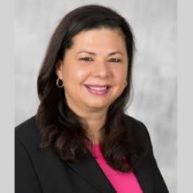
Angela Jones, Taxpayers’ Rights Advocate
As your advocate, I understand that contacting the Franchise Tax Board (FTB) can sometimes be challenging, particularly during peak-volume periods. Whether you are a taxpayer seeking help with your return or a tax professional assisting a client, planning can help you connect with the appropriate resources and avoid unnecessary delays.
Choose the Right FTB Resource
FTB continually works to optimize its processes, products, services, and resources to better serve the public. Its mission is to help taxpayers file tax returns timely and accurately and pay the correct amount. To support this mission, FTB operates various call centers that assist callers with issue-specific needs.
Plan Before You Call
FTB services millions of calls each year. As a result, callers may experience longer wait times or may need to call back when an agent becomes available. Before calling, review the information available on FTB’s website to determine whether your question can be answered online.
If your issue requires assistance from an agent, visit the Wait Times dashboard to identify the best time to call. Preparing your questions and account information in advance can also help make the call more productive.
Don’t Use AI Assistants to Call FTB
New technologies, such as Artificial Intelligence (AI), are becoming more widely available. However, taxpayers and tax professionals should be cautious when using AI assistants, call-hold assistance features, or similar tools while contacting an FTB call center.
If an FTB agent discovers they are speaking with an AI assistant during a call, the agent will end the call. The taxpayer or tax professional may then need to call back or submit the inquiry to FTB in writing. To prevent delays or interruptions, do not use an AI assistant to contact an FTB call center. Calling directly helps protect your time and makes it easier to receive the assistance you need.
Help Avoid Missed Callbacks
Calls from FTB may occasionally be identified as potential spam by your phone carrier. Although this is largely outside FTB’s control, FTB has worked with its technology partners to whitelist the callback number used by its virtual hold service, 916-845-1043, and the outbound number used to return calls, 916-845-1385, with all major cell phone carriers.
To avoid missing an FTB callback, review your phone’s call-filtering settings and check your spam or blocked-call notifications. Adding FTB’s callback number and outbound number used to return calls to your list of approved callers can help ensure FTB calls are not filtered, blocked, or flagged and minimize the risk of missing a return call from FTB.
Consider Written and Online Options
If you are unable to reach an agent or need to follow up after a call, consider using FTB’s chat options or other online resources available, such as MyFTB and those mentioned above. Taking a few moments to plan your contact method can reduce delays and help ensure that your question reaches the appropriate FTB business area.
My goal as your advocate is to help you navigate the tax system as efficiently as possible. By identifying the appropriate FTB call center, checking current wait times, preparing your questions and account information in advance, and whitelisting FTB’s callback and outbound return call numbers, you can help make your call more productive. These steps benefit both individual taxpayers and tax professionals serving their clients. Please revisit the July 2025 Ask the Advocate article for more helpful issue-resolution information.
I hope these tips will help you communicate with FTB more efficiently and effectively.